
In today’s fast-paced digital world, businesses must establish a strong online presence to stay competitive. Digital marketing has become an essential tool for companies looking to reach their target audience, increase brand awareness, and drive revenue growth. From social media platforms to search engines, digital channels offer countless opportunities for businesses to connect with potential customers.
What is Digital Marketing?
Digital marketing refers to the promotion of products and services through online channels such as websites, search engines, social media platforms, email, and mobile applications. Unlike traditional marketing methods, digital marketing allows businesses to engage with their audience in real time, measure campaign performance, and optimize strategies for better results.
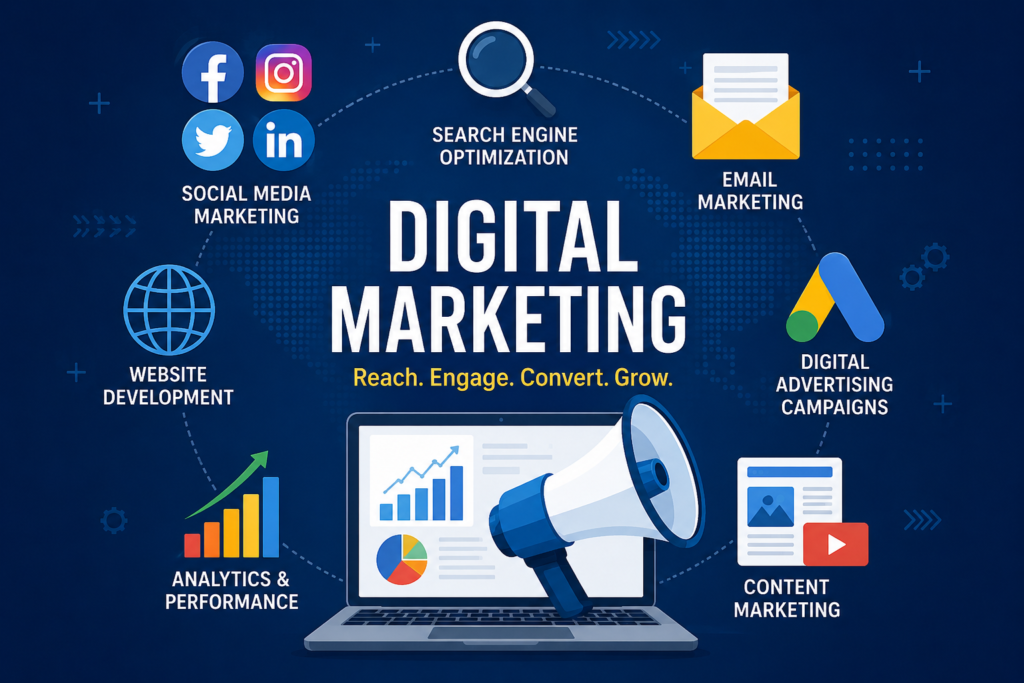
Effective Online Marketing Strategies
Successful businesses implement a variety of online marketing strategies to achieve their goals. These strategies include content creation, email marketing, influencer partnerships, and paid advertising. A well-planned digital marketing strategy helps businesses attract qualified leads, nurture customer relationships, and improve brand visibility.
By leveraging data-driven insights, marketers can identify customer preferences and create personalized experiences that enhance engagement and conversions.
The Power of Social Media Marketing
One of the most impactful components of digital marketing is social media marketing. Platforms such as Facebook, Instagram, LinkedIn, and X (formerly Twitter) enable businesses to interact directly with their audience and build lasting relationships.
Social media marketing helps brands:
- Increase brand awareness
- Drive website traffic
- Generate leads and sales
- Improve customer engagement
- Build customer loyalty
With the right content strategy, businesses can significantly boost their online presence and foster meaningful customer interactions.
Search Engine Optimization for Better Visibility
Another critical aspect of digital marketing is search engine optimization (SEO). SEO involves optimizing website content, structure, and technical elements to improve visibility in search engine results pages.
Effective search engine optimization can:
- Increase organic website traffic
- Improve search rankings
- Enhance user experience
- Build brand credibility
- Support long-term business growth
Businesses that invest in SEO often experience sustainable inbound traffic growth, reducing their dependence on paid advertising channels.
Digital Advertising Campaigns That Deliver Results
While organic strategies are important, digital advertising campaigns provide businesses with immediate visibility and targeted reach. Platforms such as Google Ads and social media advertising networks allow marketers to target specific demographics, interests, and behaviors.
Well-executed digital advertising campaigns can:
- Generate qualified leads quickly
- Increase website visits
- Boost sales and conversions
- Improve brand recognition
- Deliver measurable return on investment (ROI)
Combining paid advertising with organic marketing efforts creates a balanced and effective digital marketing strategy.
Measuring Success Through Analytics
Data analysis plays a crucial role in digital marketing success. Businesses should regularly monitor content marketing metrics such as page views, engagement rates, bounce rates, and customer acquisition costs. These insights help marketers understand what is working and where improvements are needed.
Additionally, focusing on conversion rate optimization enables businesses to maximize the value of their website traffic. By improving landing pages, calls-to-action, and user experience, companies can convert more visitors into customers.
Conclusion
Digital marketing continues to transform the way businesses connect with consumers. By implementing effective online marketing strategies, leveraging social media marketing, investing in search engine optimization, and running targeted digital advertising campaigns, businesses can achieve sustainable growth and long-term success.
As competition in the online marketplace increases, organizations that prioritize digital marketing, focus on inbound traffic growth, improve conversion rate optimization, and track content marketing metrics will be better positioned to thrive in the digital age.
Frequently Asked Questions (FAQs)
1. What is digital marketing?
Digital marketing is the practice of promoting products, services, or brands through online channels such as websites, search engines, social media platforms, email, and digital advertisements to reach and engage target audiences.
2. Why is digital marketing important for businesses?
Digital marketing helps businesses increase brand visibility, reach a larger audience, generate qualified leads, improve customer engagement, and achieve measurable results at a lower cost compared to many traditional marketing methods.
3. What are the most effective online marketing strategies?
Some of the most effective online marketing strategies include content marketing, email marketing, social media marketing, search engine optimization (SEO), influencer marketing, and pay-per-click (PPC) advertising.
4. How does social media marketing help businesses grow?
Social media marketing enables businesses to connect directly with customers, build brand awareness, increase website traffic, generate leads, and strengthen customer relationships through engaging content and interactions.
5. What is search engine optimization (SEO)?
Search engine optimization (SEO) is the process of improving a website’s content, structure, and technical performance to increase its visibility on search engine results pages and attract organic traffic.
6. What are digital advertising campaigns?
Digital advertising campaigns are paid marketing efforts conducted through platforms such as Google Ads, Facebook Ads, Instagram Ads, and LinkedIn Ads to promote products or services to targeted audiences.
7. How can businesses achieve inbound traffic growth?
Businesses can achieve inbound traffic growth by creating high-quality content, optimizing their website for search engines, maintaining an active social media presence, and providing valuable resources that attract potential customers.
8. What is conversion rate optimization (CRO)?
Conversion rate optimization (CRO) is the process of improving a website or landing page to increase the percentage of visitors who complete desired actions, such as making a purchase, filling out a form, or subscribing to a newsletter.
9. Which content marketing metrics should businesses track?
Important content marketing metrics include website traffic, page views, bounce rate, engagement rate, lead generation, conversion rate, time on page, and return on investment (ROI).
10. How long does it take to see results from digital marketing?
The timeline varies depending on the strategy used. Paid advertising can generate results almost immediately, while SEO and content marketing typically take several months to produce significant and sustainable results.